When a garage door stops working properly, homeowners often face an important decision: should they repair the existing door or replace it entirely? The answer is not always obvious. A broken spring, damaged roller, noisy opener, or dented panel may be fixable, while widespread rust, repeated breakdowns, poor insulation, and outdated safety features may indicate that replacement is the more practical choice.
Understanding the difference between garage door replacement vs. repair can help you protect your home, control costs, improve curb appeal, and avoid unnecessary delays. Although a repair may seem like the less expensive option, repeated service calls can eventually cost more than installing a new, reliable garage door. On the other hand, replacing a door that only needs a simple adjustment is an unnecessary expense.
The right decision depends on several factors, including the age of the door, the type and extent of the damage, repair costs, energy efficiency, appearance, safety, frequency of breakdowns, and your long-term plans for the property. This guide explains how to evaluate each situation and choose the solution that offers the best value.
A garage door is more than a large moving panel at the front of your home. It is a complex system made up of panels, tracks, rollers, hinges, cables, springs, brackets, weather seals, an opener, and safety sensors. Every component must work correctly for the door to open and close smoothly. If one part fails, the entire system can become inconvenient or unsafe.
“The garage door is often the largest moving object in a home, so regular inspection and professional maintenance are essential for safe operation.”
Before deciding between repair and replacement, it is important to identify exactly what has failed. A door that will not open could have a broken spring, a disconnected cable, a failed motor, a blocked photo-eye sensor, or a problem with the remote control. Each issue has a different solution and cost.
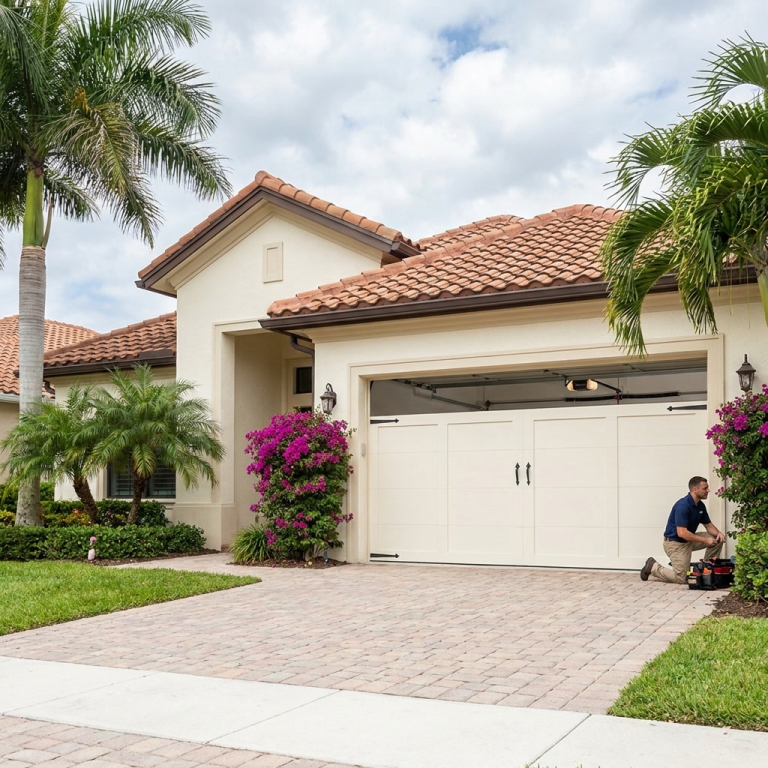
In many cases, a professional inspection can prevent you from making an expensive decision based on incomplete information. A qualified technician can determine whether the problem is isolated or whether it reflects broader deterioration throughout the door system.
Repair is generally the better option when the garage door is relatively new, structurally sound, and affected by a specific component failure. Garage doors can often provide many years of service when they are properly maintained. Springs, rollers, cables, hinges, weather stripping, and openers are replaceable parts. Replacing one worn component may restore safe and reliable performance without requiring a completely new door.
For example, a broken torsion spring does not automatically mean that the entire garage door must be replaced. Springs eventually lose tension because they are designed for a limited number of cycles. If the panels, tracks, cables, and opener are in good condition, replacing the springs may be the most sensible choice.
Similarly, noisy operation may be caused by worn rollers, loose hinges, inadequate lubrication, or misaligned tracks. These problems are often repairable. A technician may replace the rollers, tighten hardware, adjust the track, and lubricate the appropriate moving parts. Afterward, the door may operate quietly for years.
Garage door repair is often appropriate in the following situations:
- The door is less than 10 years old and has been maintained properly.
- The damage is limited to one or two replaceable components.
- The panels are straight, stable, and free from extensive rust or rot.
- The tracks are in good condition and can be realigned safely.
- The opener is modern, reliable, and compatible with the door.
- The repair cost is significantly lower than the cost of a new installation.
- The door still provides acceptable security, insulation, appearance, and convenience.
One of the strongest arguments for repair is that it preserves a door you already know. You are familiar with its operation, appearance, and maintenance history. If it has served your household reliably, a targeted repair may restore its original performance with minimal disruption.
Repair can also be useful when you are planning to sell your home soon and need to address a specific operational problem. A door that sticks, makes loud noises, or fails to close properly can create a poor impression during a showing. Fixing the immediate issue may improve functionality without requiring a major renovation. However, homeowners should avoid concealing serious problems simply to complete a sale. If the door is near the end of its service life, transparent disclosure and a replacement estimate may be more appropriate.
Another benefit of repair is reduced installation time. Many repairs can be completed during one service visit, while replacement involves measurements, product selection, ordering, removal of the old door, installation, adjustment, and disposal. If you need the door working quickly, repair may provide the fastest solution.
However, repair is not always the most economical option. A low initial price can be misleading if the door continues to fail. A homeowner may pay for a spring replacement one month, new rollers the next month, and an opener repair later in the year. Over time, the total cost can approach or exceed the price of a new system, while the old panels and hardware continue to deteriorate.
Replacement becomes more attractive when the garage door has multiple problems or has reached the end of its expected service life. Older doors may have weak insulation, outdated openers, worn hardware, poor weather sealing, and limited safety features. If several components are failing at once, replacing the entire system can provide more predictable performance.
Age is one of the first factors to consider. Many residential garage doors last approximately 15 to 30 years, depending on material, climate, installation quality, frequency of use, and maintenance. An older door is not automatically defective, but age increases the likelihood that additional components will fail after one repair.
For instance, if a 20-year-old door needs a new spring, cable, rollers, and bottom seal, the repair may restore operation temporarily. Yet the panels may still be poorly insulated, the opener may lack modern safety features, and other hardware may soon require attention. Replacing the door may offer better long-term value.
Visible structural damage is another major reason to consider replacement. A minor dent in one panel may be repairable or may require one panel to be replaced. But extensive warping, cracks, rust, rot, or separation between panels can compromise the door’s strength and alignment. A garage door must be rigid enough to move along its tracks without bending or binding. Structural deterioration can place additional stress on the springs, opener, and tracks.
Replacement may be advisable when:
- The door is more than 15 to 20 years old and requires frequent repairs.
- Multiple panels are damaged, warped, cracked, or badly rusted.
- The door is sagging, binding, or falling out of alignment.
- The repair estimate is close to the cost of a new, professionally installed door.
- The opener is outdated, unreliable, or lacks current safety functions.
- The door provides little insulation and causes uncomfortable garage temperatures.
- Water, wind, dust, or pests enter through damaged seals and gaps.
- You want to improve curb appeal or prepare the home for resale.
- Replacement parts are difficult to find because the system is obsolete.
- The door has serious safety concerns that cannot be economically corrected.
Safety should be a central part of the garage door replacement vs. repair decision. Garage doors are heavy, and their springs store substantial energy. A damaged spring, frayed cable, loose bracket, or unstable panel can cause serious injury or property damage. Homeowners should not attempt to remove springs, disconnect cables, or adjust high-tension components without proper training and tools.
Modern garage doors and openers include safety features such as photo-eye sensors, automatic reversal, manual release mechanisms, stronger brackets, and improved control systems. If an older system lacks these features or does not respond correctly during testing, upgrading may be safer than repeatedly repairing individual parts.
A simple safety test involves placing an object in the door’s path and activating the close cycle, but this should be performed only according to the manufacturer’s instructions and with caution. The door should reverse when the safety sensors detect an obstruction. If it does not, stop using the door until a professional inspects it.
“Never operate a garage door with a broken spring, frayed cable, damaged track, or visibly unstable panel. A malfunctioning system can become dangerous without warning.”
Energy efficiency is another important consideration. An attached garage can affect the temperature of rooms located above or beside it. An uninsulated or poorly sealed garage door may allow hot air, cold air, moisture, and drafts to enter. This can make adjacent living spaces less comfortable and may increase heating and cooling demands.
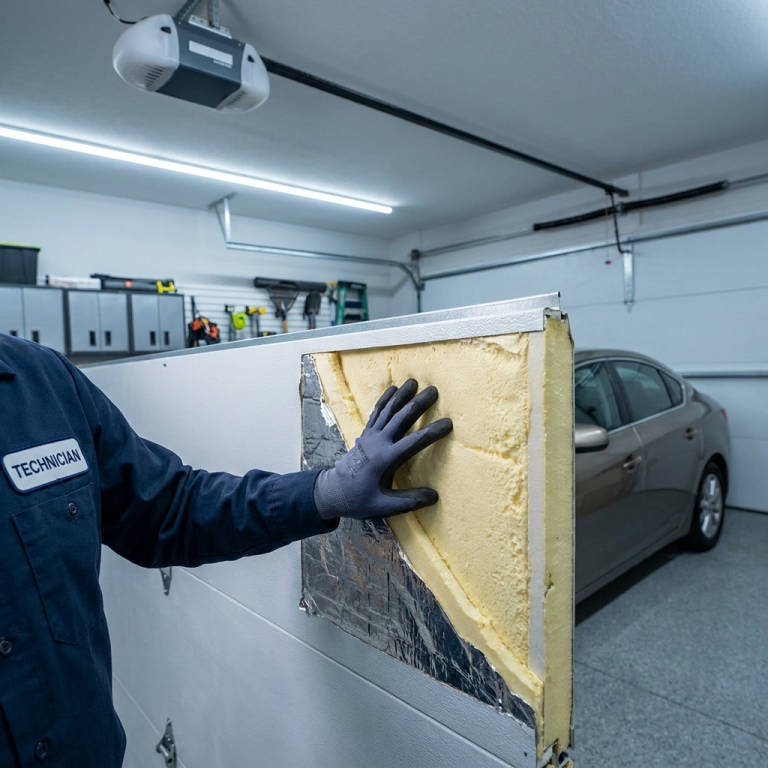
When replacing a garage door, homeowners can choose from insulated steel, aluminum, wood, composite, and other materials. Insulated doors typically use layers of steel, polyurethane, or polystyrene to improve thermal performance and reduce noise. The appropriate choice depends on the local climate, garage use, budget, and design preferences.
Repair can improve energy performance if the problem is limited to worn weather stripping or a damaged bottom seal. Replacing the perimeter seal may reduce drafts and water intrusion at a relatively low cost. However, new seals cannot transform a thin, uninsulated door into a high-performance insulated system. If the panels themselves offer minimal protection, full replacement may be the better long-term investment.
Noise can also help reveal whether repair or replacement is appropriate. Some noise is normal, especially during startup and stopping. Excessive grinding, squealing, rattling, popping, or shaking may indicate worn rollers, loose hardware, track problems, spring tension issues, or opener wear.
If the noise began recently and the door remains level and stable, repair may solve the problem. If the door has always been loud because of old construction, thin panels, worn hardware, and an aging opener, replacement can provide a more noticeable improvement. Nylon rollers, reinforced hardware, belt-drive openers, and insulated panels are often quieter than older systems.
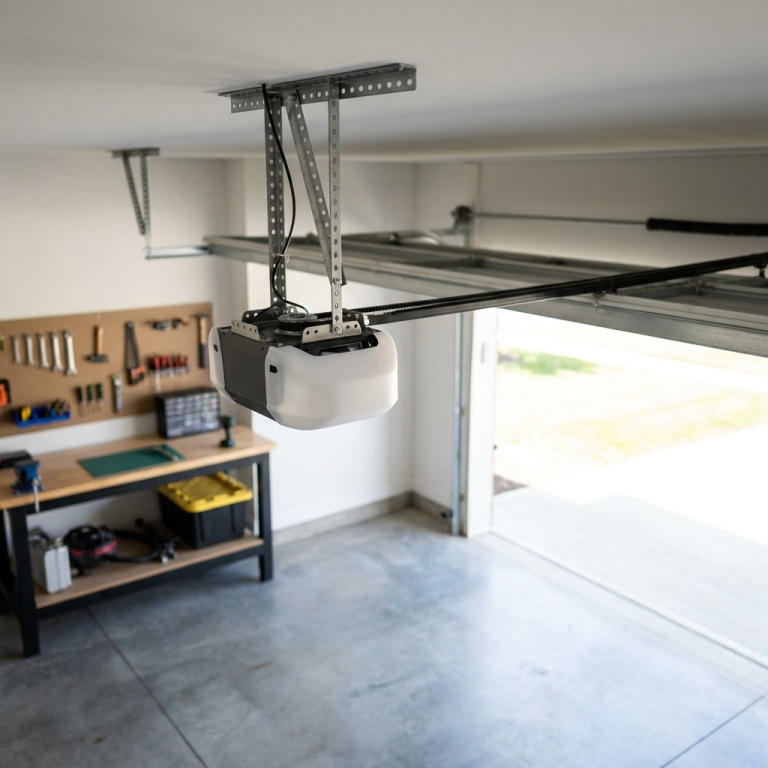
The condition of the opener should be evaluated separately from the condition of the door. A functioning door may need only an opener replacement, while a newer opener may be installed on an older door if the door is properly balanced and compatible. Do not assume that a defective opener means the entire garage door must be replaced.
At the same time, installing a new opener on a severely worn door may not be a wise investment. If the door is heavy, unbalanced, or difficult to move manually, the new opener will be forced to work harder. This can shorten its life and create additional safety concerns. The door should be inspected and corrected before installing a replacement opener.
Balance is an important diagnostic factor. When the opener is disconnected using the emergency release, a properly balanced door should move smoothly and remain in place when partially open. If it falls, rises quickly, or feels unusually heavy, the springs or other components may require professional adjustment. Never attempt to alter spring tension yourself.
Cost is naturally one of the biggest considerations. Repair prices vary depending on the component, labor, door type, location, and urgency. Replacing a seal or roller is usually far less expensive than replacing a door. Spring and cable work may cost more, while major panel replacement, track repair, or opener replacement can increase the total.
A new garage door involves the cost of the door itself, hardware, installation labor, removal of the old system, disposal, permits where applicable, and optional upgrades. Custom colors, windows, decorative hardware, high-performance insulation, smart controls, and specialty materials can increase the project price.
Instead of comparing only the immediate repair quote with the replacement quote, calculate the likely cost over the next several years. Ask how many repairs the door has needed recently, how old the remaining components are, and whether replacement parts are available. A door that needs one inexpensive fix may be worth repairing. A door that requires repeated service may be a poor candidate for continued investment.
A practical way to evaluate the decision is to compare the repair cost with the replacement cost and consider the age of the door. If the repair is less than a small portion of replacement cost and the door is in good condition, repair often makes sense. If the repair represents a substantial percentage of replacement cost and the door is old or deteriorating, replacement deserves serious consideration.
This is not a rigid mathematical rule. A lower-priced repair is not automatically better, and a higher-priced replacement is not always necessary. The quality of the diagnosis matters. A trustworthy professional should explain what failed, whether the problem is urgent, what additional issues were found, and how long each option is expected to last.
Homeowners should be cautious when a technician recommends immediate replacement without explaining the condition of the existing system. They should also be cautious when someone promises that a very old and heavily damaged door can be made “like new” with a minimal repair. Ask for a written estimate that separates parts, labor, warranties, disposal, and optional upgrades.
The door’s appearance may influence the decision, especially when it faces the street. A garage door can occupy a large portion of a home’s front elevation. Faded paint, dents, rust, outdated windows, or an incompatible design may make the property look older than it is.
Repair can improve appearance when the issue is a small dent, peeling finish, or damaged hardware. A replacement panel may match the existing door, but matching can be difficult if the original model has been discontinued or has faded over time. In some cases, replacing one panel creates a visible color or texture difference.
Replacing the entire door provides an opportunity to select a style that complements the home’s architecture. Options include traditional raised panels, carriage-house designs, contemporary flush panels, full-view aluminum frames, wood-look composites, and custom window arrangements. A visually appealing door can improve curb appeal and contribute to a more updated exterior.
If you are considering selling your home, appearance and operation both matter. Buyers may view a damaged garage door as evidence of deferred maintenance. A new door can make the property appear better cared for, although the return on investment depends on the local market, product quality, and installation. The goal should not be to choose the most expensive door but to select a durable style that fits the home and neighborhood.
Weather exposure is particularly important in coastal, humid, storm-prone, or extremely hot regions. Moisture and salt air can accelerate corrosion on springs, tracks, fasteners, and panels. Strong sunlight can fade finishes and degrade seals. Wind can stress the door, especially if it is not properly reinforced or rated for local conditions.
In areas with severe weather, homeowners should ask whether the replacement door meets applicable wind-load requirements. A professional installer can explain reinforcement options, hardware requirements, and any local building standards. Repairing an old door may not provide the same level of protection as installing a properly rated system.
Material selection also affects the repair-versus-replacement decision. Steel doors are popular because they are durable and available in many designs, but damaged steel can rust if the finish is compromised. Aluminum doors are lightweight and resistant to some forms of corrosion, though they may dent more easily. Wood doors offer distinctive character but require regular maintenance. Composite materials can provide a wood-like appearance with different maintenance requirements.
A damaged wood door may sometimes be restored through sanding, sealing, and replacement of individual components. But rot, warping, and moisture damage can spread. If the structure is compromised, replacement is usually more reliable. Likewise, a severely corroded steel door may continue to deteriorate even after cosmetic repairs.
Maintenance can extend the life of a garage door and make repair more worthwhile. Homeowners should visually inspect the panels, springs, cables, rollers, tracks, seals, and hardware several times each year. Look for rust, frayed cables, loose bolts, gaps, cracks, abnormal movement, and signs of water intrusion.
Keep tracks clear, but do not apply heavy grease inside them unless the manufacturer specifically recommends it. Tracks guide the rollers and should remain properly aligned. Lubricate hinges, rollers, bearings, and springs only with a product appropriate for garage door systems. Excess lubricant can attract dust and interfere with operation.
Test the door’s balance and safety features as directed by the manufacturer. Listen for changes in sound and pay attention to hesitation, shaking, uneven movement, or delayed reversal. Early attention can turn a major failure into a smaller repair.
Good maintenance does not eliminate eventual replacement. Every door and component has a useful life. Springs are commonly rated by cycles, with one cycle representing one opening and closing. A household that uses the garage several times every day may reach the rated cycles sooner than a household that uses it only occasionally.
The frequency of use should therefore be part of your decision. A busy household may benefit from higher-cycle springs, durable rollers, reinforced hardware, and a dependable opener. A door used only occasionally may not require premium features, although safety and proper installation remain essential.
Smart technology can also affect the choice. Many modern openers allow homeowners to monitor the door remotely, receive alerts, control access, integrate with home automation platforms, and create temporary guest permissions. These functions may be valuable for families, rental properties, home offices, and anyone concerned about security.
A new opener can provide smart features without replacing the door, provided the door is in good condition. Conversely, replacing the door may be a good opportunity to upgrade the opener and controls together. Ask whether the new components are compatible and whether the system includes battery backup if power outages are common in your area.
Security should not be overlooked. An old door with damaged panels, weak locks, or unreliable closing may create an entry point into the home. Garage doors with windows should use secure glazing or appropriate reinforcement, particularly when the garage provides direct access to living spaces.
Repairing a broken lock or replacing a damaged panel may address a specific security concern. However, if the entire system is weak or difficult to secure, replacement can provide a stronger overall solution. A smart opener can add monitoring, but technology does not replace the need for a structurally sound door.
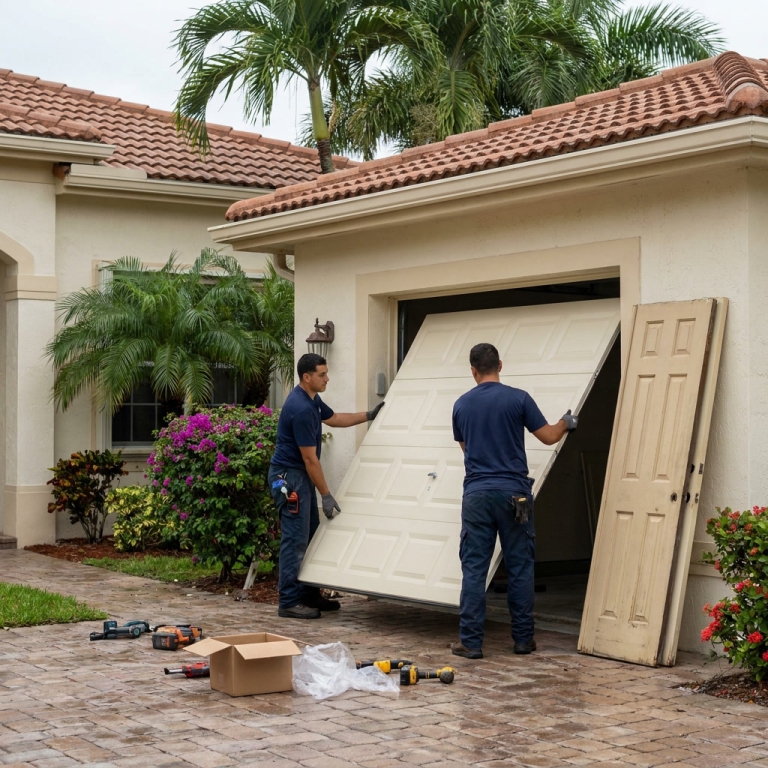
The installation process is another difference between repair and replacement. Repair typically involves diagnosing the failed part, securing the door, replacing or adjusting components, testing the system, and explaining maintenance. Replacement involves removing the old door and hardware, preparing the opening, installing new tracks and springs, hanging the panels, connecting the opener, adjusting travel limits, testing safety systems, and cleaning the work area.
Proper installation is critical. Even a high-quality door can perform poorly if the tracks are not level, the springs are incorrectly sized, the panels are improperly aligned, or the opener limits are not set correctly. Poor installation can lead to premature wear, excessive noise, unsafe movement, and warranty problems.
For that reason, homeowners should choose an experienced, insured, and properly trained garage door professional. Confirm that the estimate includes installation, hardware, removal of the old door, and warranty details. Ask how the company handles unexpected structural conditions around the opening.
If you need service in South Florida, you can learn more about available garage door services at GarageFL. A local professional can assess the door, explain whether repair or replacement is appropriate, and account for regional weather and installation requirements.
There are also situations where neither a simple repair nor a standard replacement is enough. If the garage opening has shifted, the framing is damaged, water is entering around the structure, or the floor is uneven, additional work may be required. Addressing the underlying issue is essential. Installing a new door on a damaged opening may only hide the problem temporarily.
Homeowners should also consider whether the current door meets their lifestyle needs. A single-car door may be inconvenient for a growing family. A solid panel may provide privacy but limit natural light. A manual door may be adequate for a detached garage but less convenient for an attached garage used several times daily. Replacement allows you to solve functional problems that repair cannot address.
The decision can be simplified by asking five questions:
- How old is the garage door, and has it required frequent repairs?
- Is the problem isolated to a replaceable component, or is the door structurally deteriorating?
- Will the repair improve reliability for several years, or is it likely to be temporary?
- Does the current door meet your needs for safety, security, insulation, appearance, and convenience?
- Which option provides the better total value when future repairs and maintenance are considered?
If the answers point toward a sound door with a single failed component, repair is probably the better choice. If the answers reveal age, repeated breakdowns, structural damage, poor efficiency, and outdated safety features, replacement is likely to be the more responsible investment.
It is also reasonable to request two estimates: one for repair and one for replacement. The estimates should be detailed enough to compare. A repair estimate should identify the parts being replaced and any remaining concerns. A replacement estimate should specify the door material, insulation level, hardware, opener, warranty, installation labor, and removal costs.
Do not choose based solely on the lowest price. A low-quality spring, roller, or opener may fail sooner than a reputable component. An inexperienced installer may create problems that are expensive to correct. The best value combines appropriate products, skilled labor, safety, durability, and clear warranty coverage.
Warranties deserve careful attention. A manufacturer’s warranty may cover panels, springs, hardware, or the opener for different periods. Labor may have a separate warranty. Ask what voids the warranty, whether maintenance is required, and who handles claims. A long product warranty does not necessarily mean the entire system is covered for that length of time.
Repair warranties should also be explained. Find out whether the warranty applies only to the replaced component or to the entire repair. If an old part causes a related problem later, understand whether that service is included or billed separately.
Environmental considerations may influence replacement as well. A durable, insulated door can reduce heating and cooling losses in connected areas and may last for decades. Reusing a serviceable door through repair can also avoid unnecessary disposal. The most sustainable option is generally the one that provides reliable service for the longest reasonable period without compromising safety.
When replacement is selected, dispose of the old door responsibly. Metal components may be recyclable, and some service providers include removal and disposal in the installation price. Ask whether the old materials will be recycled or taken to an appropriate facility.
Many homeowners delay making a decision because they worry about disruption or cost. However, a garage door that is difficult to open may prevent access to vehicles, tools, storage, or emergency supplies. A door that will not close can also leave the garage exposed overnight. Addressing the problem promptly can reduce risk and prevent a small defect from causing secondary damage.
If the door is stuck open, secure the garage and contact a professional. If it is stuck closed and your vehicle is inside, do not force the door upward. Forcing it can damage the panels, opener, tracks, or cables. A technician can determine whether the door can be safely released and moved.
Emergency repairs may be necessary, but avoid making rushed replacement decisions when possible. If the door is safe to secure, obtain a complete evaluation and compare options. A reputable company should be able to distinguish an urgent safety repair from a long-term recommendation.
The phrase Garage Door Replacement vs. Repair describes more than a price comparison. It is a decision about safety, reliability, efficiency, appearance, and long-term ownership. Repair is often the smart answer when the door is relatively young and the failure is limited. Replacement is often the better answer when the system is aging, repeatedly breaking down, structurally damaged, or no longer meets your needs.
There is no universal age at which every garage door must be replaced. A well-maintained, high-quality door may last longer than an inexpensive or neglected one. Likewise, a newer door can require replacement after severe impact or improper installation. Condition matters more than age alone.
A professional inspection is especially important when springs, cables, tracks, or panels are involved. These parts work under tension or support significant weight. Attempting a do-it-yourself repair may result in injury, damage, or an incorrectly balanced system. Simple maintenance such as cleaning and visual inspection may be appropriate for homeowners, but high-tension repairs should be left to trained professionals.
For the best outcome, describe the symptoms accurately when scheduling service. Mention whether the door is noisy, stuck, crooked, slow, shaking, reversing unexpectedly, or failing to respond to the remote. Tell the technician about recent impact, storm damage, unusual sounds, or prior repairs. This information can speed up diagnosis.
Keep records of repairs, parts, dates, and costs. A service history makes future decisions easier. If repairs are becoming more frequent or expensive, the pattern will be clear. Records can also help when selling the home or requesting warranty service.
In the end, the right decision should support how you use your home and what you expect from the garage door. If you need a quick, affordable solution for a limited problem, repair may be ideal. If you want dependable operation, improved efficiency, stronger security, modern technology, and a refreshed appearance, replacement may deliver greater value.
Before approving any work, confirm the following:
- The cause of the problem has been clearly identified.
- The technician has explained both repair and replacement options when appropriate.
- The estimate includes all parts, labor, fees, and disposal charges.
- The proposed equipment is suitable for the door and opening.
- Safety testing will be completed after the work.
- Warranty terms are provided in writing.
- The installer is experienced, insured, and familiar with local requirements.
Ultimately, Garage Door Replacement vs. Repair is not about choosing the option with the smallest immediate price tag. It is about choosing the option that offers safe, dependable performance and sensible long-term value. A careful evaluation can help you avoid unnecessary replacement while also preventing you from spending repeatedly on a door that has reached the end of its useful life.
If your garage door is noisy, damaged, unreliable, or unsafe, schedule a professional inspection before the issue becomes more serious. GarageFL can help homeowners evaluate their options, understand the condition of their current system, and choose a practical solution based on safety, budget, appearance, and long-term performance. Contact a qualified garage door professional today to request an inspection and determine whether repair or replacement is the better choice for your home.
Skip the YouTube rabbit hole - we'll have a tech at your door same day across Broward, Dade and Palm Beach.